Range Repair
American Range vs Wolf: Burners, Ovens, Service and Parts
American Range vs Wolf comes down to burners: many American Range models use open, commercial-style burners, while Wolf uses sealed, dual-stacked burners that wipe clean and simmer low. Compare ovens, hood needs, service and parts before you buy.
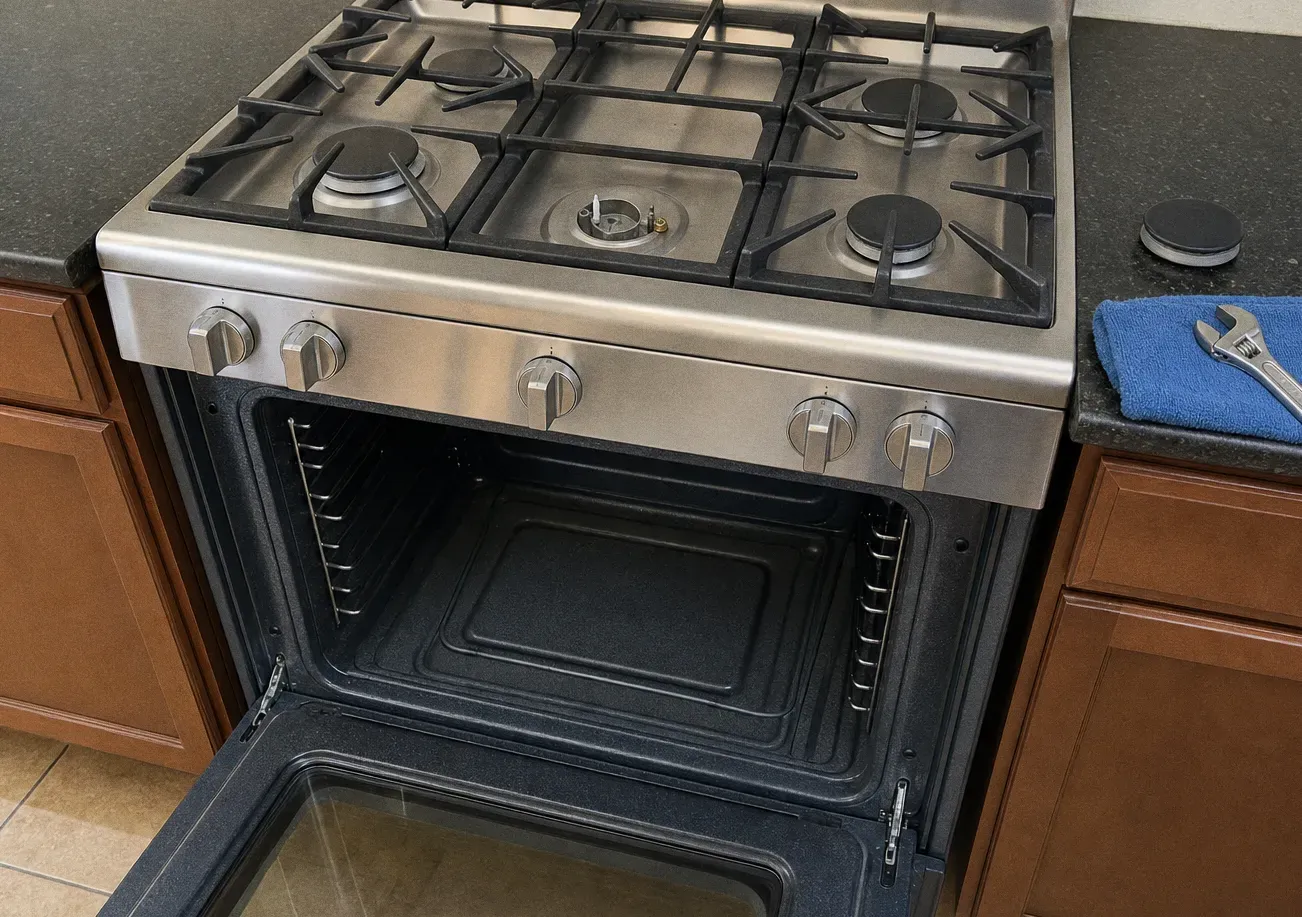
American Range vs Wolf is mostly a question of burners. Many American Range models carry open burners straight from the brand’s commercial side, so the flame hits the pan directly and spills fall through to a tray underneath. Wolf builds its gas and dual-fuel ranges around sealed, dual-stacked burners: the top tier gives full heat, the lower tier holds a gentle simmer, and a boilover stays on a surface you can wipe. Cook on both in a showroom if you can, then make the one phone call most buyers skip: ask who repairs that brand near you and how long a common part, such as an igniter, takes to arrive.
That second step carries extra weight in Brookline. Plenty of kitchens here sit inside older buildings where the hood duct has to snake a long way to reach outside air, and no badge on the range fixes smoke that the hood cannot carry away. The sections below compare construction, ovens, the faults each design tends to develop, and what owning the range looks like a few years after delivery.
Open burners and sealed burners, side by side
An open burner is a cast head sitting over an open pan, with air feeding the flame from below. Cooks who sear and stir-fry often like it because the heat is direct and the grates are built heavy enough for big stock pots. The trade-off is cleaning. Anything that boils over drops under the grate, so you lift the grates, pull the burner heads and empty the drip tray rather than wiping a flat surface. Crumbs and grease can also settle in the ports and leave a lopsided flame until they are brushed out.
A sealed burner is fixed to the cooktop so nothing gets underneath. Wolf’s dual-stacked version puts two rings of flame in one burner, which is why it can move from a hard boil to a simmer low enough for melting chocolate without a diffuser. Its weak point is the reverse of the open design: liquid that pools around the burner base can reach the igniter and leave it clicking after the pan is lifted. That is a nuisance more than a breakdown, and most of the time it clears once the area dries, as our note on a Wolf burner that clicks but will not light explains step by step.
Both makers use heavy stainless bodies, continuous grates and chunky knobs. Wolf’s red knobs are the familiar signature, with other finishes offered. Wider ranges from either maker are often sold with a griddle or grill section in place of a pair of burners, but the available layouts differ, so check the spec sheet of the exact model rather than trusting a showroom display.
Gas oven or dual-fuel oven, and how each one cooks
The oven decision matters as much as the burners, and it is the same question whether you are weighing American Range, Wolf or another pro-style brand. A dual-fuel range pairs a gas top with an electric oven. Electric heat is drier and steadier, which helps with bread, pastry and anything that must brown evenly across several racks, and the controls usually offer more cooking modes. It needs a dedicated 240-volt circuit as well as the gas line, which can mean electrical work in an older kitchen.
An all-gas range runs the oven on gas too. The heat is a little moister, which suits roasts and braises, and the hookup is simpler: a gas supply plus an ordinary outlet for the igniters, lights and convection fan. Gas ovens have their own wear parts, chiefly the oven igniter and the safety valve it works with, and their temperature tends to swing a bit more around the setting than an electric cavity does.
Wolf sells both formats and uses convection in both. American Range’s ovens follow its commercial background, and the convection arrangement, broiler type and interior width vary by series, so compare those three items model by model. Whichever brand you choose, an oven that bakes evenly will earn its keep every week, while a burner rated a little hotter than the next one rarely changes dinner.
Where each design tends to need a technician
No pro range is maintenance free, and the patterns follow the design more than the logo. On sealed-burner tops the usual calls are spark modules and igniters, typically after moisture or a cleaning spray has worked into a knob switch or an electrode. On open-burner tops, clogged ports and burner heads seated out of line come up more often than electrical faults. Gas valves on either type can stiffen with age. Inside the oven, temperature sensors drift, convection fan motors wear, door hinges tire under heavy glass doors, and on dual-fuel models the control board is the expensive item.
For Wolf work, these are typical ranges, with the firm price set only after diagnosis. Igniter or spark module replacement runs $270–$690, and burner valve or orifice service runs $260–$1,090. Oven thermostat or sensor calibration sits at $140–$720, a convection fan or motor at $320–$870, and a control board or touch panel at $540–$1,550. Door hinge, glass or seal work runs $200–$970.
Service and parts a few years in
This is where the two brands differ most, and it has nothing to do with build quality. Wolf has a very large installed base, its parts move through wide distribution, and technicians who work on high-end cooking see the brand constantly, so a common part is usually easy to source. American Range is a much smaller company with a narrower dealer and service network. That is not a mark against the range itself, but it makes one question worth asking before you sign: who in your area works on it, and are parts held locally or shipped from the factory?
We are an independent Wolf cooking service, and we fit factory-approved parts. A visit costs a flat $95. That sum pays for the trip and a complete diagnosis, and once you say yes to the repair it comes off the final bill. More on the work itself is on our Wolf range repair page.
Hood, gas line and clearance before the order
Whatever you buy, the range is only as good as the air above it. A pro-style top can put out far more heat and grease than the builder-grade range it replaces, and the hood has to capture that at the cooktop and then push it through the duct. In an older building, a duct with several elbows loses a lot of its pull, so size the hood for the run you actually have, not the straight-pipe figure on the box. Our range hood repair page covers the blower side once everything is in.
Next, confirm the gas supply. A larger range may need a bigger line or a different regulator setting, and a qualified gas fitter should check that well before delivery day. Dual fuel adds the 240-volt circuit. Finally, read the installation manual for side and rear clearance to cabinets, and measure the doorways and stair turns along the route in. A 48-inch range is very heavy, and it has to reach the kitchen before it can cook anything.
Replacing an old Wolf, or keeping it
Some owners searching American Range vs Wolf are not shopping fresh at all; they own a Wolf with a fault and wonder whether to switch. For context, a new pro range of the same class costs many times more than any single repair listed above, before installation is even counted, and the heavy parts of a Wolf range, meaning the body, grates and burner bases, rarely wear out. Replacement makes more sense when several costly parts fail together, when the door or oven cavity is physically damaged, or when you want a different size or fuel type anyway.
The same reasoning covers the other names people raise as a Wolf range alternative, such as Hestan or Café, the premium line from GE. Line up burner type, oven fuel, hood demands and local service for each candidate, and the choice usually settles itself. Call (781) 410-4833 if you would like the Wolf you already own diagnosed before you decide.
Still asked on the phone
Is American Range better than Wolf?
Neither wins outright; they suit different cooks. American Range appeals to people who want open, commercial-style burners, while Wolf suits cooks who value sealed burners that wipe clean and hold a very low simmer. Service and parts access near your home deserves as much weight as the burner choice.
Should I choose a Wolf dual-fuel range or an all-gas one?
Choose dual fuel if you bake often and can add a 240-volt circuit; choose all-gas if you mostly roast and braise or want the simpler hookup. Both put gas burners on top, so the real difference is the heat inside the oven and the wiring it needs.
Are open burners harder to clean than sealed burners?
Usually, yes. Spills on an open burner drop beneath the grates into a tray, so cleaning means lifting grates and burner heads. A sealed burner keeps spills on the cooktop surface, although liquid around its base can make the igniter click until the area dries.
Is it worth repairing an older Wolf range instead of buying a different brand?
Often it is, because the body, grates and burner bases of a Wolf range rarely wear out, and most faults come down to one part such as an igniter, a sensor or a fan motor. A diagnosis tells you which part has failed before you spend money on a new range.
What does a Wolf service visit cost?
The visit is a flat $95, which pays for the trip and a full diagnosis. If you go ahead with the repair, that $95 is taken off the final bill, and you see a firm repair price before any work starts.